Table of Content
- Introduction
- What Inside Ashwagandha?
- The Incredible Benefits of Ashwagandha
- How to Take Ashwagandha?
- Is It Safe?
- Final Thoughts
- About Titan Botanics
- FAQ
- References
Introduction
Ashwagandha (Withania somnifera) is one of the most researched adaptogenic herbs used across nutraceutical, herbal, and ayurvedic formulations. For more than 3,000 years, it has been valued as a natural adaptogen. This plant-based compound helps the body manage stress, boost energy levels, improve mental clarity, and support hormonal balance.
Often called “Indian Ginseng”, Ashwagandha derives its name from Sanskrit:
- Ashwa = Horse
- Gandha = Smell
In recent years, Ashwagandha has gained massive global attention due to scientific studies confirming its benefits for stress reduction, sleep quality, brain performance, fertility, and athletic strength. Let’s explore what makes this herb a powerhouse for modern health.
What’s Inside Ashwagandha?
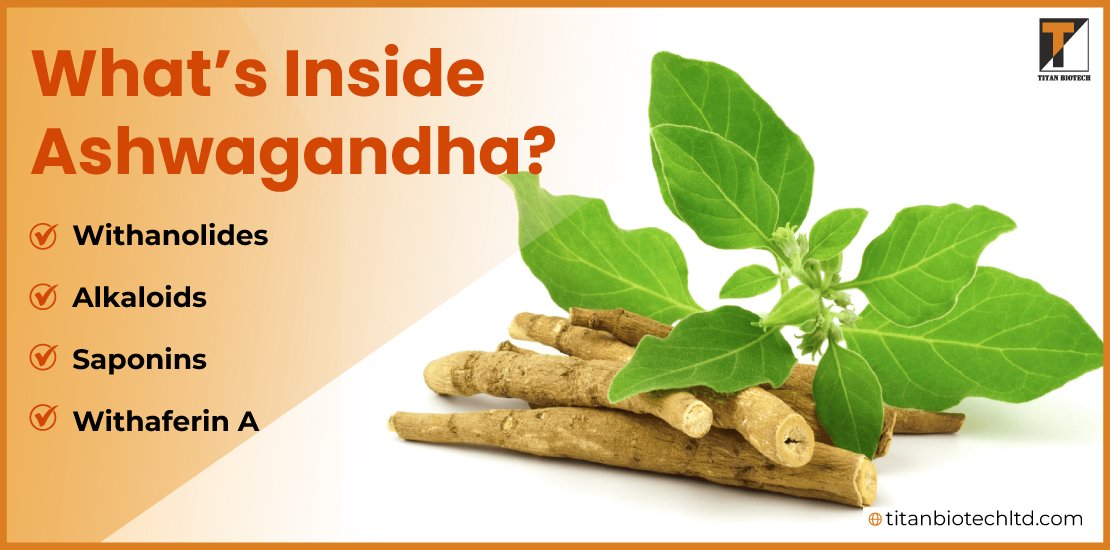
Ashwagandha is packed with powerful compounds that work together to support your body. The key players include:
Ashwagandha is rich in bioactive molecules that deliver its adaptogenic and therapeutic effects. These include:
- Withanolides
The most researched active compounds known for:
✔ Reducing stress
✔ Anti-inflammatory effects
✔ Supporting hormonal balance
✔ Boosting immunity
- Alkaloids
Contribute to:
✔ Relaxation
✔ Anxiety reduction
✔ Nervous system support
- Saponins
Help with:
✔ Immune function
✔ Heart health
✔ Antioxidant protection
- Withaferin A
A potent compound known for:
✔ Antioxidant activity
✔ Anti-inflammatory effects
✔ Possible anti-cancer potential (ongoing research)
These natural molecules make Ashwagandha a full-spectrum herb suitable for stress, cognition, reproductive health, and overall wellness.
The Incredible Benefits of Ashwagandha

Below are the scientifically validated benefits based on clinical studies.
- A Natural Stress & Anxiety Reliever
If daily stress overwhelms you, Ashwagandha can help restore balance. Research shows that it:
- Lowers cortisol levels (the stress hormone)
- Reduces anxiety
- Improves mood stability
- Helps regulate emotional responses
- Brain Health & Cognitive Support
Ashwagandha helps sharpen the mind by:
✔ Improving memory
✔ Supporting faster information processing
✔ Enhancing focus
✔ Protecting brain cells from oxidative damage
- Fertility & Testosterone Support in Men
A well-documented benefit of Ashwagandha is its ability to enhance male reproductive health.
✔ Increases sperm count
✔ Improves sperm motility
✔ Boosts testosterone
✔ Reduces oxidative stress
- Supports Better Sleep
The term somnifera literally means sleep-inducing. Ashwagandha helps:
✔ Calm the nervous system
✔ Improve sleep quality
✔ Reduce nighttime awakenings
✔ Promote deep, restorative sleep
- Reduces Inflammation & Oxidative Stress
Chronic inflammation is linked to diseases like arthritis, diabetes, and heart issues. Ashwagandha helps by:
✔ Lowering C-reactive protein (CRP)
✔ Reducing inflammation markers
✔ Protecting cells with its antioxidant activity
- Athletic Performance, Muscle Strength & Endurance
Whether you are an athlete or fitness enthusiast, Ashwagandha can support:
✔ Muscle growth
✔ Strength improvement
✔ Better endurance
✔ Faster recovery
✔ Reduced fatigue
- Benefits for Women’s Health
Ashwagandha is equally beneficial for women, helping with:
✔ Hormonal balance
✔ PCOS support
✔ Thyroid function (especially hypothyroidism)
✔ Reduced PMS symptoms
✔ Improved mood & libido
✔ Stress-related menstrual irregularities
By supporting hormonal pathways, Ashwagandha becomes a natural aid for women’s overall wellness.
How to Take Ashwagandha?

Recommended Dosage of Ashwagandha
The right dosage depends on the form of ashwagandha you’re taking:
- Root Powder – 1–5 grams per day (usually mixed with warm milk or water)
- Capsules/Tablets – 300–600 mg per day (look for standardized extracts with at least 5% withanolides)
- Tincture – 2–4 mL per day
It’s best to start with a lower dose and gradually increase it as needed.
Is It Safe?
Ashwagandha is generally well-tolerated, but some people may experience mild side effects, such as:
- Upset stomach
- Drowsiness (if taken in high doses)
- Lower blood pressure (something to watch if you take medication for hypertension)
Pregnant and breastfeeding women should consult their doctor before taking ashwagandha, as its effects during pregnancy aren’t well studied.
Final Thoughts
Ashwagandha is one of the most powerful adaptogenic herbs available today. Backed by ancient wisdom and modern science, it supports:
✔ Stress reduction
✔ Hormonal balance
✔ Brain health
✔ Sleep quality
✔ Fertility
✔ Muscle strength
✔ Energy & performance
If you’re looking for a natural supplement to support long-term wellness, Ashwagandha is a proven option worth considering.
About Titan Botanics
Titan Botanics is a specialized segment of Titan Biotech Limited dedicated to manufacturing high-quality herbal extracts. With a strong focus on purity and efficacy, Titan Botanics utilizes advanced extraction techniques to ensure the highest potency of bioactive compounds.
The company caters to various industries, including pharmaceuticals, nutraceuticals, cosmetics, and food. Its extensive range of herbal extracts is derived from carefully selected raw materials that meet global quality standards. Titan Botanics emphasizes sustainability and innovation, ensuring that its products support health and wellness naturally. Backed by Titan Biotech’s legacy, it remains a trusted provider of premium herbal solutions worldwide.
FAQ
1. What is Ashwagandha, and how does it work?
Ashwagandha is an Ayurvedic adaptogen that helps the body manage stress by lowering cortisol levels. Its bioactive compounds—especially withanolides—support mental clarity, energy, sleep, and hormonal balance.
2. What are the top benefits of Ashwagandha?
Key benefits include reduced stress, improved sleep, enhanced brain function, better hormonal balance, increased muscle strength, improved fertility in men, and stronger immune support.
3. How much Ashwagandha should I take daily?
Most studies recommend 300–600 mg of standardised extract or 1–5 grams of root powder daily. The ideal dosage depends on your health goal and product potency.
4. Is it safe to take Ashwagandha every day?
Yes, Ashwagandha is generally safe for daily use when taken within recommended doses. People who are pregnant, breastfeeding, or taking thyroid/blood pressure medication should consult a doctor first.
5. Can Ashwagandha help with stress and anxiety?
Yes. Multiple clinical studies show that Ashwagandha significantly lowers cortisol and helps reduce symptoms of stress, anxiety, and fatigue while improving mood and mental calmness.
6. Does Ashwagandha improve fertility in men?
Yes. Research shows Ashwagandha can increase sperm count, motility, testosterone levels, and overall reproductive health in men with low fertility.
7. Can Ashwagandha improve athletic performance?
Studies show Ashwagandha improves muscle strength, endurance, and recovery, making it popular among athletes and fitness enthusiasts.
8. Does Ashwagandha help with sleep?
Yes. Ashwagandha promotes relaxation, reduces stress, and supports deeper, more restful sleep. The “somnifera” in its scientific name means sleep-inducing.
9. Are there any side effects of Ashwagandha?
Mild side effects may include stomach upset, drowsiness, and low blood pressure. High doses may cause digestive discomfort in sensitive individuals.
10. How long does Ashwagandha take to show results?
Most individuals notice benefits within 2–4 weeks of consistent use, with maximum effects usually seen after 6–8 weeks.
References
- https://www.sciencedirect.com/science/article/abs/pii/S1472648317306259
- https://ods.od.nih.gov/factsheets/Ashwagandha-HealthProfessional/
- https://www.nmi.health/ashwagandha-a-review-of-clinical-use-and-efficacy/
- https://www.sciencedirect.com/science/article/pii/S0965229920319099
- https://onlinelibrary.wiley.com/doi/10.1155/2021/8254344